
Picayune Strand Restoration Project
- Project Overview
- Project Benefits
- Project Features
- Project Timeline
- Site History
- Feasibility Study
- Project Implementation Report
Project Overview
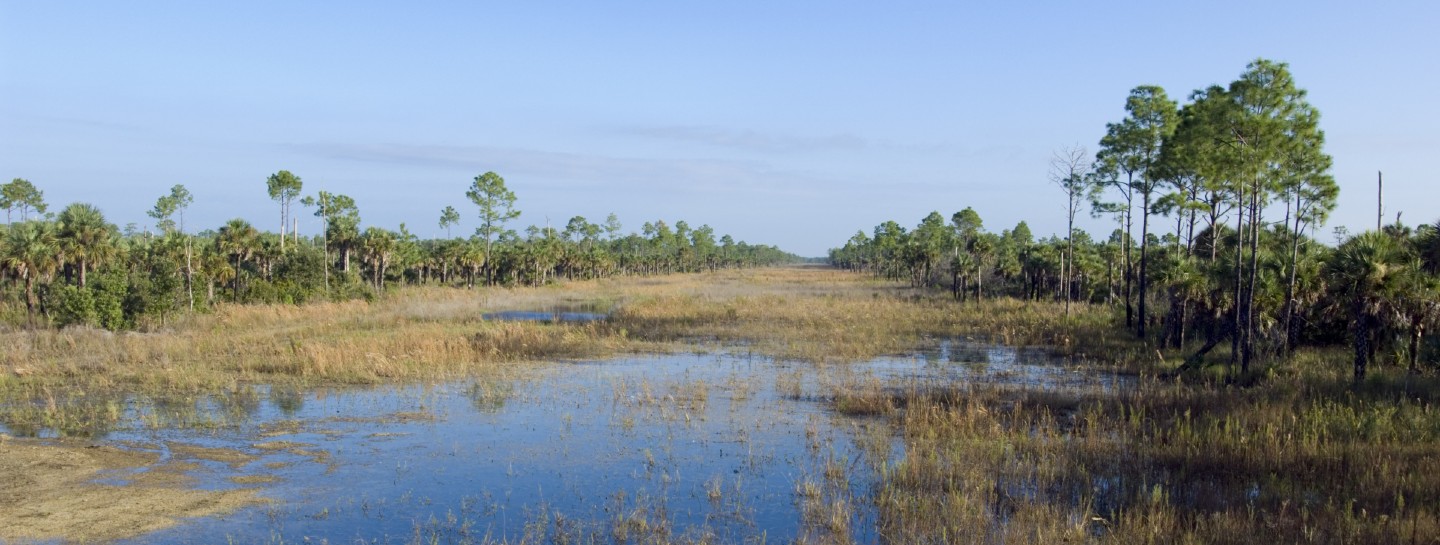
 The Picayune Strand Restoration Project (PRSP) restores the natural flow of water throughout 55,000 acres of native Florida wetlands that are critical to the health of the Everglades ecosystem.
The project is an important component of the Comprehensive Everglades Restoration Plan (CERP) and is helping to reestablish the flow of water within a network of publicly managed lands in Southwest Florida. It is expected to result in improved flows of water to Collier Seminole State Park, Ten Thousand Islands National Wildlife Refuge and the Rookery Bay Estuarine Research Reserve.
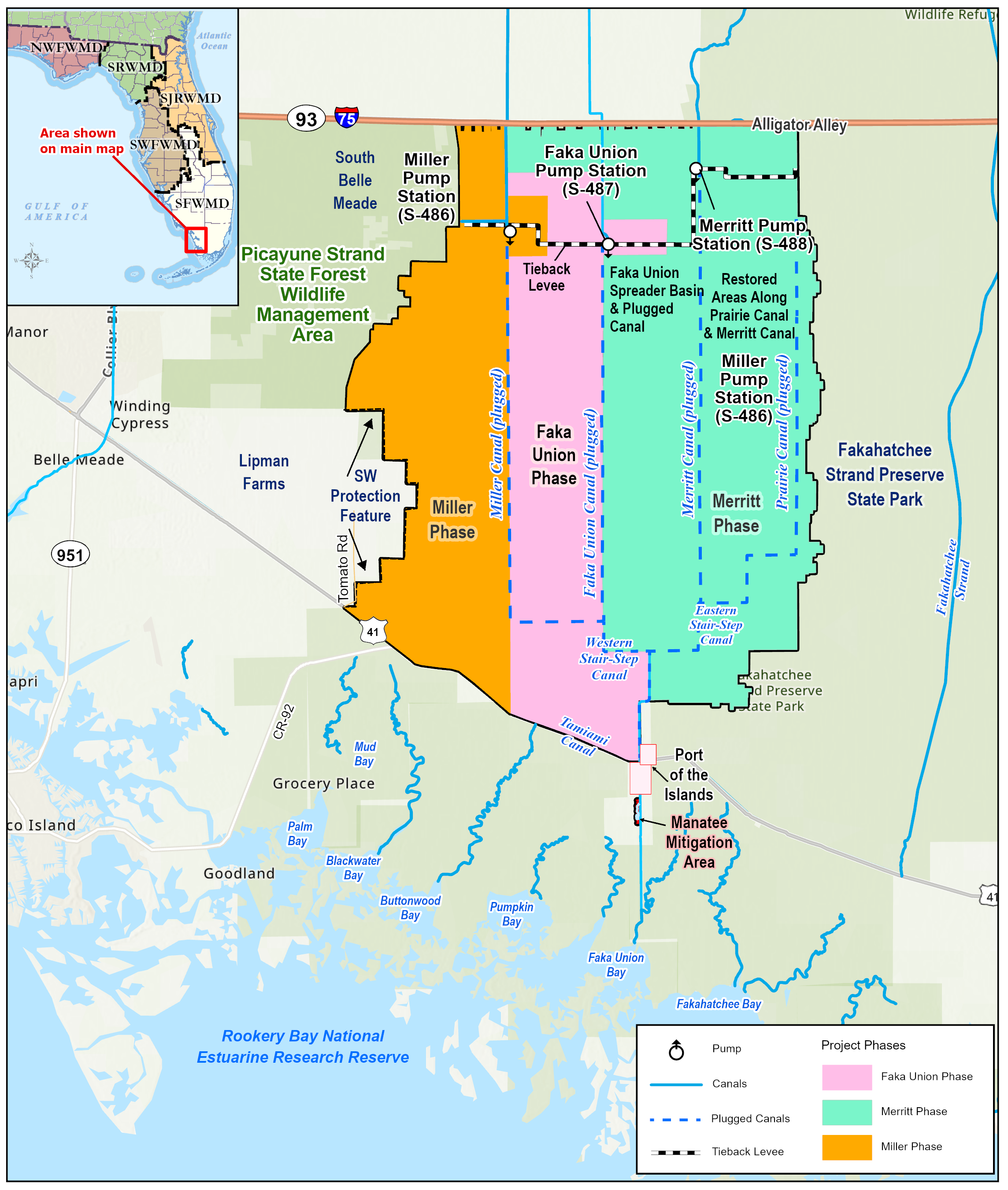
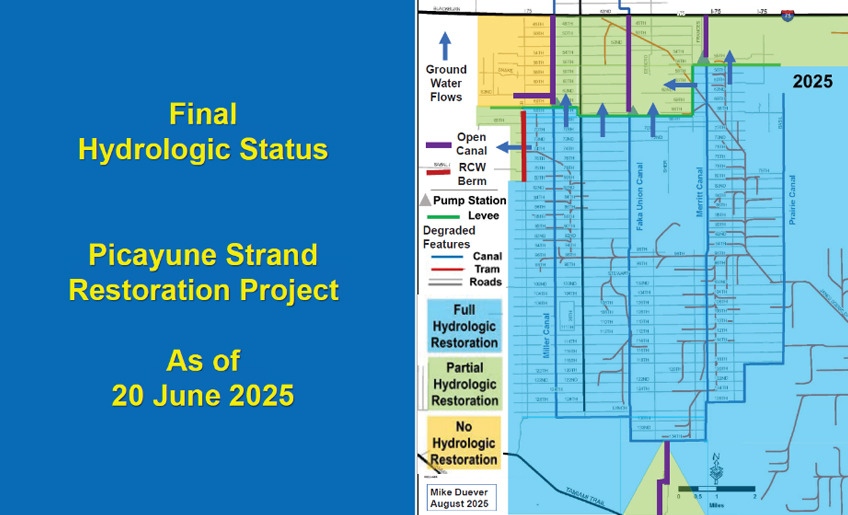
The project included the construction of three pump stations, the removal of over 260 miles of roads, the plugging of almost 50 miles of canals, and the removal of over 60 miles of logging tram roads. This land was drained in the early 1960s in anticipation of what was intended to become the largest residential subdivision in the world.
This landmark project was completed through a partnership between the South Florida Water Management District (SFWMD) and the U.S. Army Corps of Engineers (USACE). In 2009, it was the first Project Partnership Agreement that the USACE executed with the SFWMD as part of CERP.
Read more about the SFWMD’s efforts to advance Everglades restoration and improve water quality in Florida.
Project Benefits
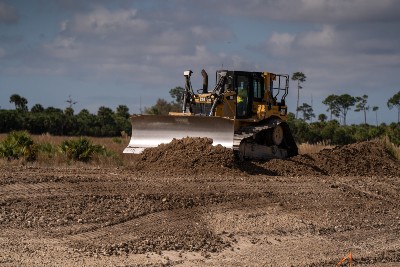 Through a collaboration between SFWMD and the USACE, the PSRP restores more than 55,000 acres of native Florida wetland and uplands. Rehydration of these wetlands supports wildlife habitat, water quality improvements, and overall ecosystem restoration efforts in the region.
The project provides many environmental benefits, including:
- Restored and enhanced habitat for fish and native wildlife, including the Florida Panther
- Reduced drainage of adjacent sensitive ecosystems
- Improved aquifer recharge to protected underground water supplies and prevent saltwater intrusion
- Reduced freshwater releases/improved health of downstream estuaries
- Increased groundwater levels
- Fire management
Project Features
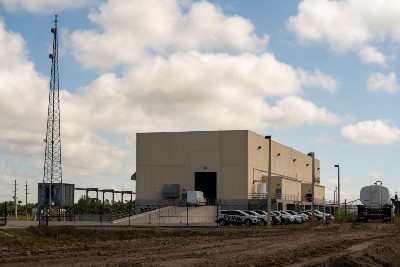 Three pump stations to direct fresh water to drained wetlands and maintain current flood protection for communities north of I-75:
- Merritt – 810 cfs
- Faka Union – 2650 cfs
- Miller – 1250 cfs
Habitat restoration removal of barriers to control outflow and mimic historic flow of water:
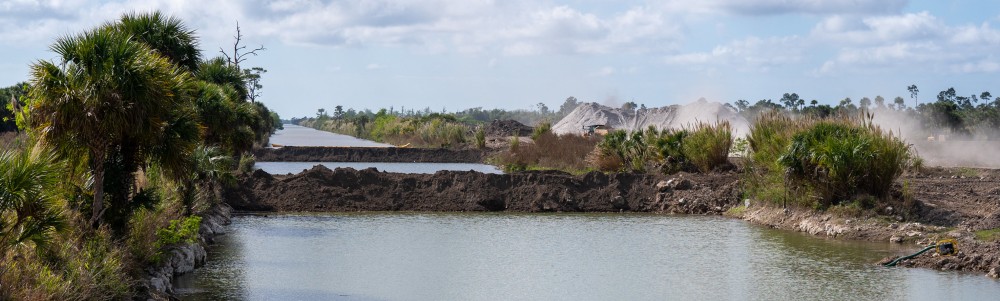
- Plugging of 42 miles of canals
- Removal of 285 miles of roads
- Removal of 62 miles of tram roads
Southwest Protection Feature levee provides flood protection for existing agricultural and residential properties.
Manatee mitigation feature to provide warm water refugia for manatees that became dependent on the flows from Faka Union Canal.
Project Timeline
The SFWMD and the USACE held a ribbon cutting ceremony to mark the completion of the Picayune Strand Restoration Project in January 2026.
|
Feature
|
Contract Award Date | Completion Date |
| Miller Tram & Road Removal | September 2019 | September 2023 |
|
Southwest Protection Feature |
||
| Levee | September 2020 | Substantial completion December 2025 |
| Conveyance Features | September 2020 | December 2024 |
| Faka Union Canal | ||
| Plugging Upper 3 Miles | Work done by USACE staff | Completed in 2022 |
| Plugging Lower 5 Miles | Work done by USACE staff | May 2024 |
| Miller Canal Plugging | Work to be done by USACE staff | June 2025 |
Site History
Restoring this natural area was all about removing the footprints of the past.
In the 1960s, more than 85 square miles of wetlands in Collier County were drained for a failed real estate development. Road construction and new canals negatively impacted the area, reducing aquifer storage, disrupting native plant communities, and increasing wildfires.
In 1985, the State of Florida, along with its partner agencies, began acquiring land in Picayune Strand and a comprehensive plan was developed to restore these vital wetlands.
Feasibility Study
SFWMD completed a Picayune Strand Water Quality Feasibility Study to identify opportunities to improve water quality in the Picayune Watershed in Collier County. The study reviewed existing data, evaluated nutrient inflow levels and recommended treatment technologies.
The Water Quality Feasibility Study is not a part of the Comprehensive Everglades Restoration Plan.
Project Implementation Report
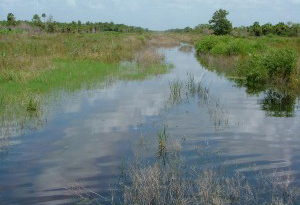 The Project Implementation Report outlined the expected project benefits, including restoration of historic wetland communities, sheet flow towards the coastal estuaries, reduction of harmful surge flows through the Faka Union Canal into Faka Union Bay, improved freshwater overland flow and seepage into other bays of the Ten Thousand Islands Region, improved aquifer recharge, decreased frequency and intensity of forest fires, improved habitat for fish and wildlife and threatened and endangered species, reduced invasion of exotic species, and increased spatial extent of wetlands.
This Report integrated the contents of an Environmental Impact Statement with the project planning report and includes an Operations Plan for the proposed structures and a long-term Monitoring Plan to assure project ecosystem benefits are obtained.