
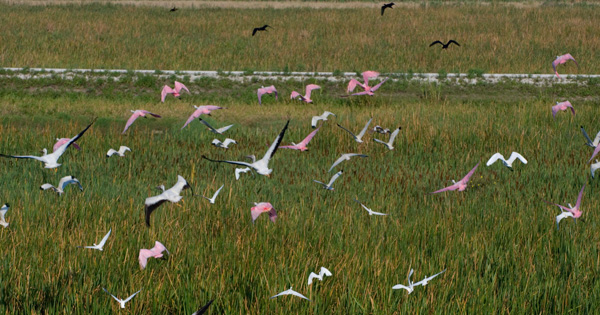
In recognition of World Migratory Bird Day, the South Florida Water Management District is highlighting our year-round work to restore and protect natural ecosystems that provide important habitat for migratory birds as they travel through the region.
DID YOU KNOW: The District supports and improves wildlife habitat through ecosystem restoration and effective land management.
SUPPORTING MIGRATORY BIRDS: South Florida is often the last stop for birds on their flight to the Caribbean and Central and South America. District lands serve as important stopover sites for birds to rest, refuel and seek shelter during their migration.
PROVIDING IMPORTANT HABITAT: The District manages thousands of acres of wetlands that provide habitat for migratory birds. In addition, the District is the steward for more than one million acres of public lands and ensures the activities are consistent with natural resources protection.
TRACKING BIRD POPULATIONS: The District monitors and tracks birds to better understand our unique ecosystems. Wading birds, in particular, are a key species.
District ecologists regularly monitor several migratory wading bird species and tracks the timing, location and distribution of wading bird nesting, as well as foraging patterns, in addition many other activities.
PROTECTING MIGRATORY BIRDS: Ensuring the protection of birds on our project sites is very important, including when these projects are being constructed. The District’s wildlife management staff conduct comprehensive Wildlife Awareness Trainings for staff and contractors that cover:
- The importance of the federal Migratory Bird Treaty Act.
- State and federally listed species that could be encountered on a project site.
- How to avoid disturbing or otherwise negatively impacting these species and nesting activities.
ONGOING MONITORING: In addition to trainings, District staff also monitor project sites for birds and other wildlife while instituting protection measures such as reduced speed limits and buffer zones on project sites. You may even notice barriers, instructions and signage to alert site visitors of nearby protected species. It's also important to note that surveys and monitoring events throughout construction and operation activities are completed under the appropriate state and federal protocols to ensure the protection of our natural resources and wildlife.
LEARN MORE: We encourage you to visit SFWMD.gov/Restoration to learn more about the District’s work to protect and restore natural ecosystems.