
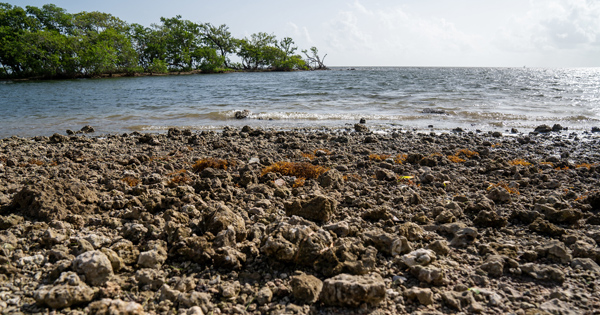
In recognition of National Estuaries Week, we are highlighting the South Florida Water Management District’s continued efforts to protect and restore South Florida’s coastal watersheds.
DID YOU KNOW: There are many distinct estuaries within the District's 16-county region, including Florida Bay, Biscayne Bay, the Lake Worth Lagoon, the Indian River Lagoon, the Caloosahatchee and the St. Lucie estuaries, to name a few.
In these coastal areas, waters from rivers flow into bays, lagoons and estuaries brimming with biological diversity. Many coastal habitats are found in and around estuaries, including salt marshes, oyster reefs, mangrove forests, coral reefs and seagrass beds.
Maintaining this diversity is a key part of maintaining the health of Florida's ecological systems and future resources.
PROTECTING COASTAL WATERSHEDS: The District works to manage stormwater flows to rivers and freshwater discharge to South Florida's estuaries in a way that preserves, protects and, where possible, restores these essential resources.
The District works in partnership with federal, state, and local officials to, within the system's limitations, ensure that rivers and estuaries receive not only the right amount of water at the right time but also clean, high-quality water.
INTERCONNECTED ECOSYSTEMS: Many of South Florida's coastal ecosystems are interconnected. Projects to restore or protect one part of the system provide benefits for those areas connected to it, whether upstream or downstream.
The Comprehensive Everglades Restoration Plan (CERP) includes many projects and components that provide significant benefits for South Florida’s coastal watersheds and protect these important natural resources.
SIGNIFICANT PROGRESS CONTINUES: The District is committed to advancing restoration projects that support the ecological health of the Greater Everglades and South Florida's coastal watersheds. Recent successes and milestones include:
✅ Celebrated the completion of the C-23 Canal Estuary Discharge Diversion Project, which reduces harmful discharges to the St. Lucie Estuary by routing excess water from the C-23 Canal to the C-44 Reservoir and Stormwater Treatment Area (STA).
✅ Celebrated the completion of the Biscayne Bay Coastal Wetlands Project, a major CERP project. This project improves the health of Biscayne Bay and aids in wetland rehydration — building coastal resiliency and improving water quality in this area of Miami-Dade County.
✅ Start-up of the Caloosahatchee (C-43) Reservoir in Hendry County. The purpose of the C-43 Reservoir is to reduce harmful flows of water to the Caloosahatchee Estuary from Lake Okeechobee and the local watershed during the wet season and provide beneficial freshwater flows to the estuary during the dry season.
✅ Broke ground on the EAA Reservoir Inflow Pump Station in Palm Beach County. The EAA Reservoir, located south of Lake Okeechobee, will store over 78 billion gallons of water and deliver up to 470 billion gallons of clean water annually to the Everglades and Florida Bay.
✅ Broke ground on the second phase of the Lake Hicpochee Project in Glades County, a key component of the Northern Everglades and Estuaries Protection Program. This project will reduce harmful discharges to the Caloosahatchee Estuary, improving water quality and providing additional water storage capacity in the region.
✅ Broke ground on the Blue Shanty Flow Way in Miami-Dade County, a vital system that will deliver clean water south across Tamiami Trail and into Florida Bay.
LEARN MORE: We encourage you to visit SFWMD.gov/Restoration to learn more about the District’s work to protect and restore our coastal watersheds in South Florida.