Lake Okeechobee
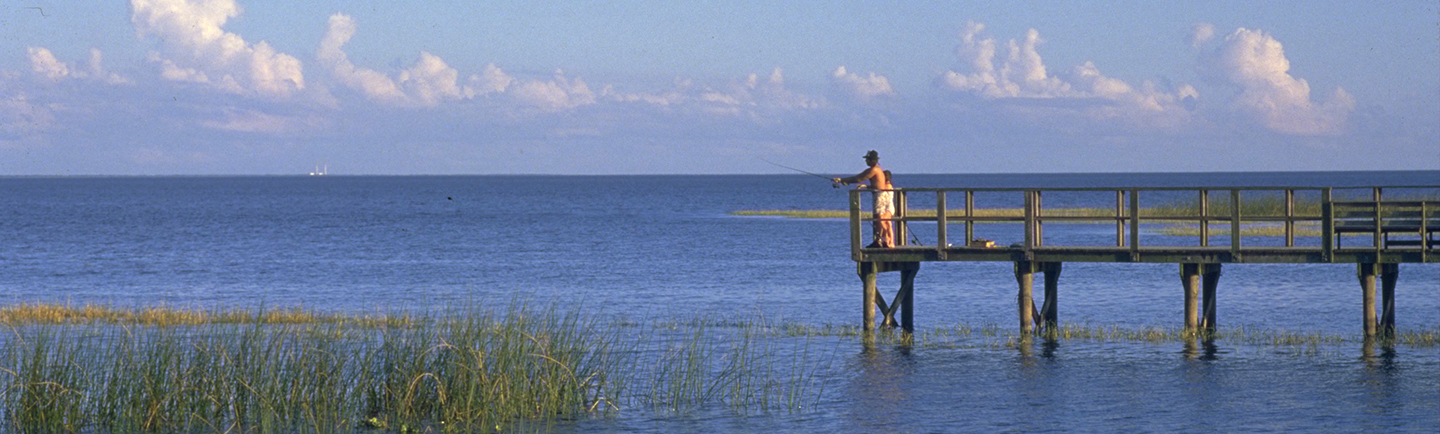
Lake Okeechobee means "big water" in the Seminole Indian language, an appropriate name for a water body whose opposite shore can't be seen from the water's edge. With a surface area of 730 square miles, it is the largest lake in the southeastern United States. Despite its impressive size, the lake is shallow, with an average depth of only 9 feet. Lake Okeechobee and its wetlands are at the center of a much larger watershed, the Greater Everglades, that stretches from the Kissimmee River through the Everglades and finally into Florida Bay. Lake Okeechobee is also a key component of South Florida's water supply and flood control systems.
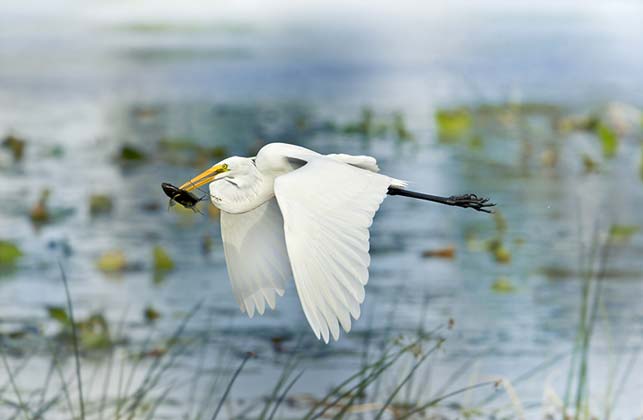
Lake Okeechobee provides natural habitat for fish, wading birds and other wildlife, and it supplies essential water for people, farms and the environment. The lake provides flood protection and attracts boating and recreation enthusiasts from around the world. It is also home to sport and commercial fisheries. The lake's health was threatened in recent decades by excessive nutrients from agricultural and urban activities in the lake's watershed, by harmful high and low water levels and by the spread of exotic vegetation.
Despite these impacts, Lake Okeechobee continues to be a vital freshwater resource for South Florida, with irreplaceable natural and community values.
- Lake Okeechobee System Operating Manual (LOSOM) Record of Decision - Signed August 12, 2024
- South Florida Environmental Report
- Real-Time Data (water conditions, status of gates)
- Lake Okeechobee Water Level History and Projected Stages [PDF]
- Lake Okeechobee Regulation Schedule Technical Summaries
- Environmental Monitoring
- North Shore Lake Okeechobee Navigation Lock Operation Criteria [PDF]
- Army Corps of Engineers Lake Okeechobee Report
- Army Corps of Engineers Lake Okeechobee Website
Lake Okeechobee Restoration Projects
Lake Okeechobee restoration efforts are underway. The Florida Legislature enacted the 2000 Lake Okeechobee Protection Act and the subsequent Lake Okeechobee Protection Program to restore the lake and its watershed. The Lake Okeechobee Protection Program is a phased, comprehensive and innovative program. It is designed to restore and protect the lake by improving water quality and implementing long-term solutions through a variety of specific components. The Florida Legislature in 2007 expanded the Lake Okeechobee Protection Act to strengthen protection for the Northern Everglades by restoring and preserving the entire Lake Okeechobee watershed, including the Caloosahatchee and St. Lucie estuaries.
Related Projects and Programs
- Northern Everglades and Estuaries Protection Program
- Other Everglades Projects
- Minimum Flows and Levels
- Water Reservations
- Water Supply Planning
- Science
- Water Quality Improvement/Stormwater Treatment Areas
- Best Management Practices
- What YOU Can Do
- Recreation
Lake Okeechobee: Past, Present and Future
In-Lake Projects
In-lake projects address three key issues:
- Impacts of excessive phosphorus entering the lake
- Impacts of extreme high and low water levels
- Impacts of nuisance and exotic species
These issues are tightly coupled, and all relate to the goal of rehabilitating the Lake Okeechobee ecosystem from impacts caused directly or indirectly by human actions. In-lake projects include cause-effect experimental research, long-term observational studies, modeling, restoration feasibility studies, exotic vegetation control and actual habitat restoration. All of this work directly supports the Comprehensive Everglades Restoration Plan and/or the Lake Okeechobee Protection Program.
Watershed Projects
Watershed projects occurring within the Lake Okeechobee watershed management area focus on reducing phosphorus flowing into the lake at the parcel, sub-basin or regional scale. Lake Okeechobee has a drainage basin containing approximately 2.8 million acres, or 4,400 square miles (including Arbuckle Creek sub-basin and the lake proper). Without the lake, the area is approximately 2.4 million acres, or 3700 square miles.
During the last century, agricultural and urban development in the watershed and the construction of the Central and South Florida Project for flood control have caused excessive nutrient inputs. Total phosphorus loading into Lake Okeechobee is approximately 600 metric tons per year. The four priority basins (S-191, S-154, S-65D and S-65E), which total approximately 450 square miles of the Lake Okeechobee watershed, contribute the highest phosphorus concentrations and loads (35 percent of total) to the lake. The majority of watershed projects concentrate on these priority basins.
The parcel, sub-basin, and regional treatment levels are directly linked, and all relate to the goal of rehabilitating the tributary and lake ecosystem. The types of watershed projects include cause-effect experimental research, observational studies, modeling, and feasibility and assessment studies. The majority of the activities are phosphorus reduction implementation projects such as stormwater treatment areas and best management practices. All of this work directly supports the Northern Everglades and Estuaries Protection Act, the Lake Okeechobee Protection Program or the Comprehensive Everglades Restoration Plan.